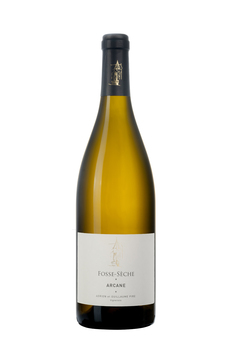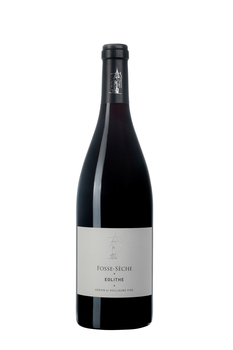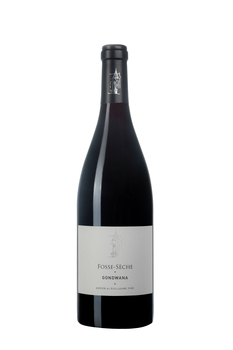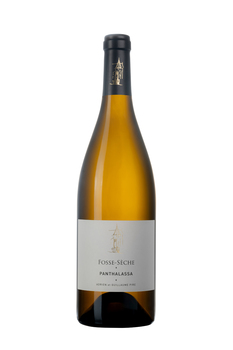
Fosse-Sèche (Fossa Sicca)
Information
- Description
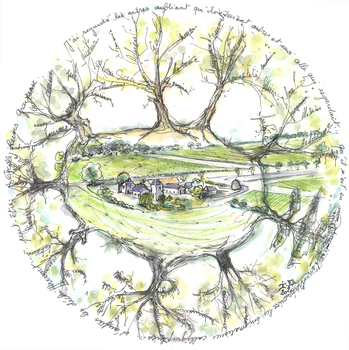
- The “Château de Fosse-Sèche” is a wine estate created by Benedictine monks between the year 800 and the year 1000. The monks used to prepare the wine for the parish. You will find the oldest stone wine vats of France in Fosse-Sèche. The estate takes its original name from the Latin: “Fossa Sicca”. More than a millennium of history imposes the legitimacy of the place called Fosse-Sèche for the cultivation of vines.
The whole line of reflection initiated some 20 years ago revolves around one simple idea: 1/3 of the area of Fosse-Sèche is devoted to wine production and the remaining 2/3 are entirely dedicated to nature and biodiversity. There are therefore 15 hectares of vines in certified organic farming and biodynamic (Biodyvin) in the middle of a single plot of 45 hectares. With a potential vineyard area of 40 hectares, the choice to use only 15 hectares for our vines represents a strong commitment. Of the remaining 30 hectares reserved for the ecosystem, we undertook fundamental work over the past 20 years to improve biodiversity and to preserve an ecosystem which was fragile at the beginning but which is strengthening over the years.
The area is classified as a LPO haven (Protection League of Birds). On December 1, 2018, more than 100 wildlife shelters were installed in Fosse-Sèche with the help and advice of the LPO. This is the largest project ever carried out by the LPO in the department.
Twenty years ago, we dug a body of water essential to the biodiversity of the area. Then, in 2010, a collective was created to protect the 17 species of amphibians of Maine-et-Loire. So we created a wetland behind the body of water to facilitate the reproduction of amphibians and certain insects.
For more than 15 years, we have sown more than 30 species of flowers in several plots at different locations on the estate to create reservoir areas for pollinating insects.
The property of Fosse-Sèche is surrounded on the 2 widest areas by 2 forests. Only the edges are part of the property (4.5 hectares)
Over the past five years, several tree plantations have been established on 3 plots spread over the estate that cover an area of about 20 hectares. About 3000 trees were planted during these 5 years. The objective of these plantations is to channel and concentrate the wind over the vineyard in order to refresh it as a fan would and thus reduce the impact of climate change.
We also went through the process of organizing a production of nectar and pollen every day of the year in order to help pollinating insects cope with this climate change. The abundance and diversity of insects on the estate is an important and essential food source for birds and bats.
A naturalist lived three months (April 1 to June 29, 2019) on the estate to make an inventory of the flora and fauna : 60 bird species and 116 insect species have been identified.
Following the COP 21 in Paris (December 2015), the government of the day launched in October 2016, via the Caisse des Dépôts et Consignation, the CDC Biodiversity Nature 2050. This is the first materialisation of COP 21. The goal of the CDC Biodiversity 2050 is to improve biodiversity in agricultural and forestry environments despite the impending climate change. This is the first time in France that such a programme exists with a budget and a vision over 35 years. Fosse-Sèche integrated this programme and has been a partner of the Nature 2050 programme from the start. In 2017, Fosse-Sèche was the winner of the national competition “Arbre d'Avenir” in the most demanding category, the CDC 2050 category. In 2018, Fosse-Sèche received the first prize for agricultural dynamics in Maine-et-Loire. This is the first time a wine estate won this award in the department. What caught the jury’s attention was the ability of Fosse-Sèche to combine economic development, social improvement of the company through the creation of several jobs and its total involvement in the preservation of the biodiversity of the estate.
Since 2019, soil and tree leaf samples identified with GPS points have been taken to measure the level of organic carbon in soils and nitrogen 15 in tree leaves. Never before in the world has a wine estate conducted this kind of research. The goal is to measure the impact of climate change on the estate and to work on the adaptability of the territory. The next measurements will be made in 2022, 2025, 2030, 2035, 2040, 2045 and 2050.
Since September 2020, the domain uses 100% renewable French electricity (hydroelectric power). Through the subscribed offer, virtuous agricultural projects of Fermes d'Avenir are financed.
Fosse-Sèche will continue working to anticipate the consequences of climate change. We are not about to run out of ideas, but we will not say more as we want to communicate only on what has already been achieved.
- Wine-growing region
- France sans IG
- Country
- France
______
Production mode
- Year of certification
- 2009
- Quality process
- Biodyvin
- Packaging
- Glass bottle
- Type of product
- Sparkling wineStill wine
______
Distribution network
- Type of current customer(s)
- Cafe / Hotel / RestaurantWine merchantImporterDirect sales
- Current countries
- BelgiumFranceThe NetherlandsCzech RepublicSwissUNITED STATES
- Type of target customer(s)
- HORECAWine merchantImporter
- Target countries
- France
______
______
Main contact
- First name
- Guillaume
- Last name
- Pire
- Fonction
- Winemaker